

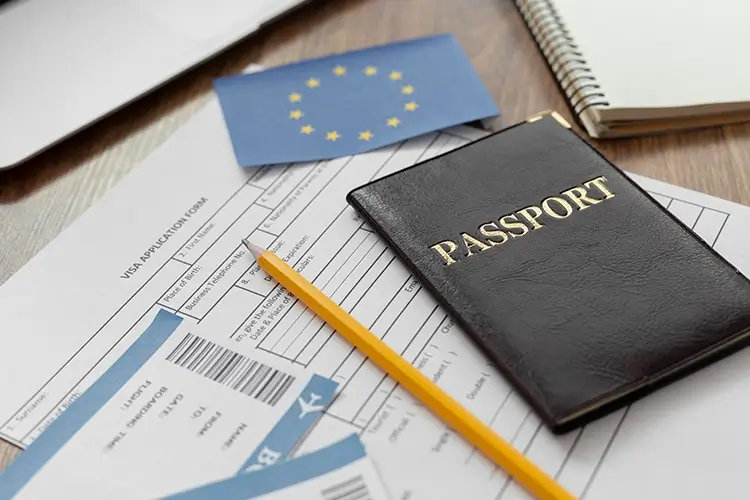
After the European Union launched the Entry/Exit System (EES) to enhance border management and track travelers’ movements, it is preparing to launch a new complementary system called ETIAS. The EU has confirmed that this system will be implemented in the fourth quarter of 2026, meaning travelers from visa-exempt countries will be required to obtain a travel authorization before heading to Europe.
About the ETIAS system
The European Travel Information and Authorisation System (ETIAS) is an electronic travel authorization system that is mandatory for visa-exempt travelers entering 30 European countries. It aims to enhance security and streamline border crossing procedures by pre-checking travelers’ information before their arrival.
The ETIAS authorization is directly linked to the passport and is valid for up to 3 years, or until the passport expires, whichever comes first. It allows multiple entries into the participating countries, giving travelers flexibility to move around, provided the visits are short-term, such as for tourism, business, or transit.
Under this authorization, travelers can stay in European countries for up to 90 days within any 180-day period.
European countries requiring ETIAS authorization
30 European countries require visa-exempt travelers to obtain an ETIAS authorization before traveling, including:
Austria, Belgium, Bulgaria, Croatia, Cyprus, Czech Republic, Denmark, Estonia, Finland, France, Germany, Greece, Hungary, Iceland, Italy, Latvia, Liechtenstein, Lithuania, Luxembourg, Malta, Netherlands, Norway, Poland, Portugal, Romania, Slovakia, Slovenia, Spain, Sweden, Switzerland.
Who needs an ETIAS authorization?
Citizens of visa-exempt countries are required to apply for an ETIAS authorization before traveling to European countries, provided the visit is short-term (up to 90 days).
The list of visa-exempt countries whose citizens must apply for ETIAS includes:
- Albania
- Antigua and Barbuda
- Argentina
- Australia
- Bahamas
- Barbados
- Bosnia and Herzegovina
- Brazil
- Brunei
- Canada
- Chile
- Colombia
- Costa Rica
- Dominica
- El Salvador
- Georgia
- Grenada
- Guatemala
- Honduras
- Hong Kong
- Israel
- Japan
- Kiribati
- Kosovo
- Macau
- Malaysia
- Marshall Islands
- Mauritius
- Mexico
- Micronesia
- Moldova
- Montenegro
- New Zealand
- Nicaragua
- North Macedonia
- Palau
- Panama
- Paraguay
- Peru
- Saint Kitts and Nevis
- Saint Lucia
- Saint Vincent and the Grenadines
- Samoa
- Serbia
- Seychelles
- Singapore
- Solomon Islands
- South Korea
- Taiwan
- Timor-Leste
- Tonga
- Trinidad and Tobago
- Tuvalu
- Ukraine
- United Arab Emirates
- United Kingdom
- United States
- Uruguay
- Venezuela
ETIAS Application Steps and Fees
Applying for an ETIAS authorization is simple and fast and can be completed entirely online. All you need is a valid passport and a few minutes to fill out the electronic form.
Application Steps:
- Fill out the application via the official website or app
- Enter personal information
- Enter passport details
- Pay the fee
Application Fee:
- €20
- Exemptions:
- Children under 18
- Seniors over 70
- Family members of EU citizens
Required Documents for ETIAS
Before starting your ETIAS application, it’s important to ensure you have all the essential requirements to make the process smooth and avoid any delays. These documents are simple but necessary to complete the application and receive your authorization via email.
Essential Requirements:
- Valid passport
- Electronic payment card
- Active email address
Passport Conditions:
- Must be valid for at least 3 months
- Must not be older than 10 years
Application Processing
After submitting your ETIAS application, the information is reviewed electronically, and in most cases, the result is issued very quickly. However, processing times may vary depending on the application, especially if authorities require additional information or further verification.
Note: It is recommended to submit your application well in advance of your travel to avoid delays, as processing can take up to 30 days.
After Submitting Your Application
Once you submit your ETIAS application, you will receive a confirmation email stating that your application has been successfully received. You will also receive a unique application number, which can be used for tracking or inquiries later.
After the application has been processed, a decision—approval or refusal will be sent to your email.
- If Approved
Make sure all the information on your travel authorization is correct, such as your name and passport number, as any mistakes may prevent you from boarding your transportation or entering the country.
- If Refused
The email will explain the reasons for refusal and include information on how to appeal, the competent authority to contact, and the timeframe for submitting the appeal.
ETIAS Validity
An ETIAS authorization is valid for up to 3 years, or until the passport used for the application expires, whichever comes first. It allows multiple entries into the participating countries, giving travelers flexibility during the validity period.
However, the short-stay rule must be followed: travelers may stay up to 90 days within any 180 days, whether the visit is continuous or split across multiple trips.
At the Border
When traveling to any country that requires ETIAS, it’s important to keep a few key points in mind to ensure smooth entry.
What to Pay Attention To:
- Carry the same passport used to apply for ETIAS, as the authorization is directly linked to it.
- Present any additional documents requested by border officers if needed.
Important Tips Before Applying
Before submitting your ETIAS application, make sure of the following to avoid delays or refusal:
- Ensure all information entered in the form is accurate, such as your name and passport details, as any errors may affect the outcome.
- Check that your passport is valid and meets the required conditions.
- Use only official channels to apply, either via the official website or the authorized app, and avoid any untrustworthy sites.
With ETIAS launching at the end of 2026, this system will become an essential step for all visa-exempt travelers to Europe. While the procedures are simple, following the rules and submitting accurate information are crucial for a smooth travel experience without issues at the border.